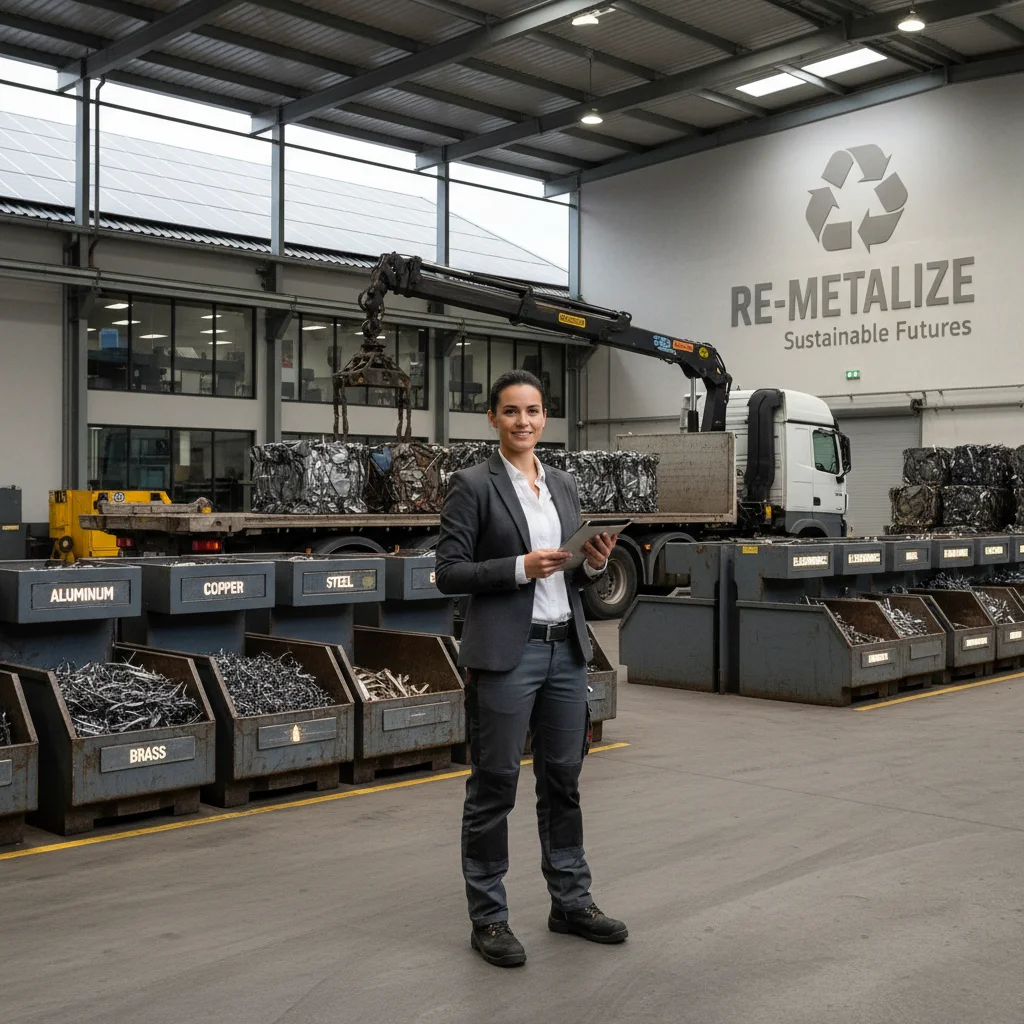
1 Industry Overview
The global scrap metal recycling market is valued at over $500 billion and growing at 4-5% annually. Key facts:
- Scrap provides 30-40% of the world's metal supply
- Over 500,000 businesses operate in the scrap sector worldwide
- Average profit margins range from 10-25% depending on specialization
- Low barriers to entry for small-scale operations
- Strong environmental tailwinds (ESG, carbon credits, regulations)
2 Getting Started: Equipment & Setup
Essential Equipment:
Startup Budget: $15,000-$75,000 depending on scale
- Scale: Certified platform scale ($2,000-$15,000)
- Magnet: To separate ferrous from non-ferrous ($200-$2,000)
- Wire Stripper: For processing insulated copper wire ($300-$5,000)
- Hand Tools: Bolt cutters, pipe cutters, tin snips ($500-$1,000)
- Vehicle: Pickup truck or flatbed for collection ($10,000-$40,000)
- Storage: Yard space with bins for sorting ($500-$3,000/month)
Startup Budget: $15,000-$75,000 depending on scale
3 Licensing & Regulations
Requirements vary by jurisdiction but typically include:
Important: Always comply with "know your customer" rules designed to prevent theft fencing.
- Business License: Standard business registration
- Scrap Dealer License: Required in most US states and EU countries
- Environmental Permits: For storage and processing of metals
- Record Keeping: Most jurisdictions require detailed purchase records (seller ID, description, photos)
- Insurance: General liability, vehicle, and environmental coverage
Important: Always comply with "know your customer" rules designed to prevent theft fencing.
4 Sourcing Scrap Metal
Successful scrap businesses develop multiple sourcing channels:
Residential: HVAC systems, plumbing, appliances, renovation debris
Commercial: Manufacturing offcuts, machine shop turnings, retail fixtures
Industrial: Factory closures, demolition projects, fleet vehicle decommissioning
Municipal: Government surplus, infrastructure replacement
E-Waste: Circuit boards, connectors, heat sinks (high value per kg)
Pro tip: Build relationships with plumbers, electricians, demolition crews, and auto shops. They generate consistent scrap and prefer reliable pickup services.
Residential: HVAC systems, plumbing, appliances, renovation debris
Commercial: Manufacturing offcuts, machine shop turnings, retail fixtures
Industrial: Factory closures, demolition projects, fleet vehicle decommissioning
Municipal: Government surplus, infrastructure replacement
E-Waste: Circuit boards, connectors, heat sinks (high value per kg)
Pro tip: Build relationships with plumbers, electricians, demolition crews, and auto shops. They generate consistent scrap and prefer reliable pickup services.
5 Pricing & Profit Strategy
Scrap metal pricing follows a simple formula:
Example for #1 Copper at $8,900/t LME:
Buy at 82-85% of LME = ~$7,300-$7,500/t
Sell to smelter at 90-92% of LME = ~$8,000-$8,200/t
Profit: $500-$900 per tonne
Use MetalMarket.cash to track real-time LME prices and calculate accurate buy/sell prices with our Scrap Calculator.
Buy Price = LME Price x Grade Recovery Rate x (1 - Your Margin)Example for #1 Copper at $8,900/t LME:
Buy at 82-85% of LME = ~$7,300-$7,500/t
Sell to smelter at 90-92% of LME = ~$8,000-$8,200/t
Profit: $500-$900 per tonne
Use MetalMarket.cash to track real-time LME prices and calculate accurate buy/sell prices with our Scrap Calculator.
6 Scaling Your Business
Once established, growth strategies include:
Successful scrap businesses scale to $1M-$100M+ in annual revenue depending on their market and specialization.
- Add Processing: Invest in shears, balers, or shredders to process metals in-house
- Specialize: Focus on high-value streams (catalytic converters, e-waste, aerospace alloys)
- Vertical Integration: Open buying locations closer to supply sources
- Export: Ship directly to overseas smelters for better prices
- Technology: Implement inventory management software, XRF analyzers for alloy identification
- Relationships: Secure direct contracts with mills and smelters
Successful scrap businesses scale to $1M-$100M+ in annual revenue depending on their market and specialization.