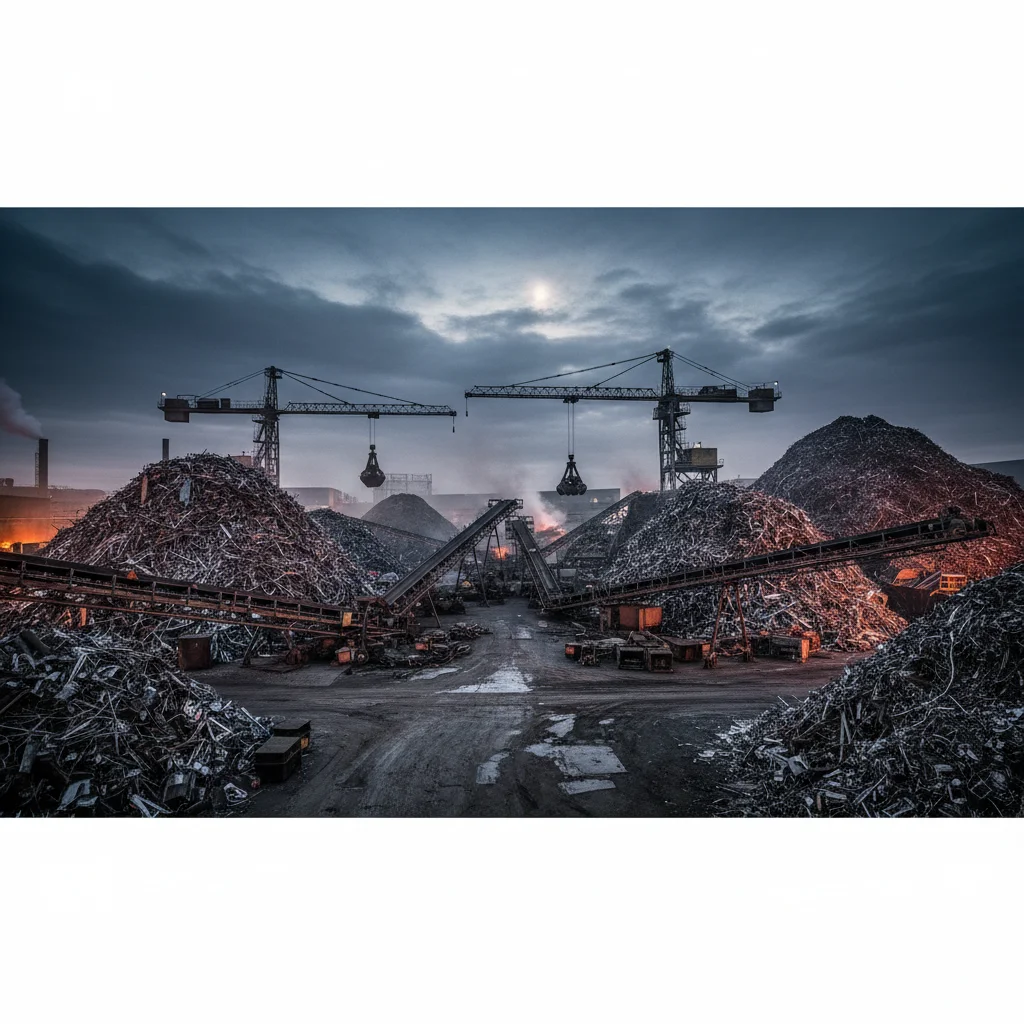
1 What is Scrap Metal Recycling?
Scrap metal recycling is the process of collecting, sorting, processing, and melting discarded metal materials to create new raw materials. Unlike many other recyclable materials, metals can be recycled indefinitely without losing their properties, making them one of the most valuable recyclable commodities on Earth.
The global scrap metal market processes over 600 million tonnes of ferrous and non-ferrous metals annually, reducing the need for virgin ore mining and significantly lowering carbon emissions.
The global scrap metal market processes over 600 million tonnes of ferrous and non-ferrous metals annually, reducing the need for virgin ore mining and significantly lowering carbon emissions.
2 Types of Scrap Metal
Ferrous Metals (contain iron): Steel, cast iron, wrought iron. These are magnetic and make up the largest volume of recycled metals.
Non-Ferrous Metals (no iron): Copper, aluminum, brass, zinc, lead, nickel, tin. These are typically more valuable per kilogram and are highly sought after by recyclers.
Precious Metals: Gold, silver, platinum, palladium. Found in electronics, jewelry, and catalytic converters. Even small quantities can be extremely valuable.
Non-Ferrous Metals (no iron): Copper, aluminum, brass, zinc, lead, nickel, tin. These are typically more valuable per kilogram and are highly sought after by recyclers.
Precious Metals: Gold, silver, platinum, palladium. Found in electronics, jewelry, and catalytic converters. Even small quantities can be extremely valuable.
3 How Scrap Metal Pricing Works
Scrap metal prices are driven by global commodity markets, primarily the London Metal Exchange (LME). Prices fluctuate based on supply and demand, economic conditions, and industrial output.
Key factors affecting scrap prices:
Key factors affecting scrap prices:
- LME Spot Prices: The benchmark for base metal pricing worldwide
- Scrap Grade: Higher purity and cleanliness command premium prices
- Volume: Larger quantities typically get better rates per kilogram
- Location: Proximity to smelters and ports affects transportation costs
- Market Demand: Industrial production cycles drive buying activity
4 Most Valuable Scrap Metals in 2026
The most valuable scrap metals to recycle in 2026 are:
1. Copper - The king of scrap metals. Bare bright copper (clean, uncoated) fetches the highest prices among base metals.
2. Aluminum - Lightweight and infinitely recyclable. Clean aluminum sheet and extrusions are in high demand.
3. Nickel - Critical for stainless steel and EV batteries. Nickel alloy scrap is extremely valuable.
4. Brass - A copper-zinc alloy that maintains strong demand in plumbing and manufacturing.
1. Copper - The king of scrap metals. Bare bright copper (clean, uncoated) fetches the highest prices among base metals.
2. Aluminum - Lightweight and infinitely recyclable. Clean aluminum sheet and extrusions are in high demand.
3. Nickel - Critical for stainless steel and EV batteries. Nickel alloy scrap is extremely valuable.
4. Brass - A copper-zinc alloy that maintains strong demand in plumbing and manufacturing.
5 Best Practices for Maximizing Scrap Value
- Sort by type: Separate ferrous from non-ferrous, and further sort by specific metal type
- Clean your scrap: Remove insulation, paint, attachments and contaminants
- Know your grades: Understand the grading system (e.g., #1 Copper vs #2 Copper)
- Track market prices: Use MetalMarket.cash to monitor real-time prices before selling
- Build relationships: Establish accounts with multiple scrap yards for competitive quotes
- Accumulate volume: Larger loads command better per-kilogram rates
6 Environmental Impact
Recycling metals saves enormous amounts of energy compared to mining and processing virgin ore:
The metal recycling industry prevents over 500 million tonnes of CO2 emissions annually, making it one of the most impactful environmental activities in the industrial sector.
- Recycling aluminum saves 95% of energy vs. primary production
- Recycling copper saves 85% of energy
- Recycling steel saves 74% of energy
The metal recycling industry prevents over 500 million tonnes of CO2 emissions annually, making it one of the most impactful environmental activities in the industrial sector.